
QUALITY CONTROL · IMPORTER BUYER GUIDE
Power Bank Cell and Capacity Claims: What Importers Should Verify
A B2B guide to checking power bank cell specifications, nominal capacity, watt-hours, rated output capacity, usable energy, test conditions and production consistency before ordering.
 Reviewed by Grace WongCo-Founder | Custom Charging Solutions Lead · Updated September 14, 2026 · 15 min read
Do not approve a power bank from the front-label mAh figure alone. Importers should verify the cell manufacturer and model, pack configuration, nominal voltage, watt-hour rating, rated output capacity or energy, conversion path, test load, cutoff voltage, temperature and sample status. A 10,000mAh cell pack is not expected to deliver 10,000mAh at a converted 5V USB output, but normal conversion loss does not justify an unsupported claim. Compare suppliers using the same documented method, then lock the approved cell, PCB, firmware and label for mass production.
Why the largest mAh number is not the safest buying decision
Capacity is one of the easiest power bank specifications to compare and one of the easiest to misunderstand. A product may show 10,000mAh on the front, 37Wh on the rating label and a lower rated capacity at 5V in the technical specification. Those values can describe different points in the same energy path rather than three contradictory products.
The buyer's task is to establish what each number represents. Cell capacity is normally stated at the cell pack's nominal voltage. A USB output has been converted to 5V, 9V, 12V or another negotiated profile. The conversion circuit, cable and operating conditions consume energy. Comparing input-side mAh directly with output-side mAh hides the voltage change and creates false expectations.
This matters commercially. An unsupported capacity claim can cause marketplace complaints, returns, distributor disputes, transport-document inconsistencies and regulatory problems. An overly conservative or poorly explained specification can also make a sound product look weaker than a competitor's exaggerated label.
Separate the four capacity and energy values
| Value | What it describes | Useful unit | Importer question |
|---|---|---|---|
| Cell capacity | Charge stored by the cell or parallel cell group at its nominal voltage | mAh or Ah | Which exact cell model and configuration produce this value? |
| Nominal battery energy | Energy represented by capacity multiplied by nominal voltage | Wh | Does the label, specification and transport file show the same energy? |
| Rated output capacity or energy | Declared deliverable output under a stated voltage and method | mAh at a stated V, or Wh | What voltage, load, cutoff and temperature define the rating? |
| Measured usable output | Result from a particular sample and test setup | mAh and Wh | Was the sample production-representative, and can the raw record be reviewed? |
Cell capacity
Cell capacity belongs to a particular cell model, chemistry, size and test method. Two cells printed with the same mAh value can differ in internal resistance, discharge capability, cycle life, thickness, safety construction and consistency. Request the manufacturer, model, specification and lot-control method rather than accepting only a generic description such as 'A-grade cell.'
Nominal energy in watt-hours
Watt-hours provide a clearer basis for comparing energy across different voltages. IATA expresses the calculation as Wh = Ah × nominal voltage. For example, 10Ah at 3.7V represents 37Wh. Do not multiply the 10,000mAh cell value by a converted 5V USB output and call it 50Wh.
Rated output capacity and measured usable output
Output-side capacity depends on the declared voltage and test conditions. A defensible specification states both the result and the method. A single screenshot without model identity, equipment, load and cutoff information is not enough for supplier comparison.

Why a 10,000mAh power bank does not deliver 10,000mAh at 5V
A simplified energy comparison helps buyers check whether a claim is physically plausible. A 10,000mAh pack at 3.7V contains a nominal 37Wh before conversion. If the product delivered 30Wh at the USB output in a defined test, the energy efficiency for that test would be 30Wh divided by 37Wh, or about 81%. The corresponding capacity at 5V would be 6,000mAh because 30Wh divided by 5V equals 6Ah.
This example explains why input-side and output-side mAh differ. It is not a promised efficiency for every TOPTAI model. Real performance changes with converter design, cell condition, load, output voltage, cable loss, state of charge, cutoff logic, display consumption and temperature.
| Calculation | Formula | Purpose |
|---|---|---|
| Nominal battery energy | Capacity (Ah) × nominal voltage (V) | Compare stored energy and verify the Wh label |
| Measured output energy | Test equipment result or integrated output power over time | Record what the sample delivered under the defined test |
| Energy efficiency | Measured output Wh ÷ nominal battery Wh | Compare samples only when the method is consistent |
| Equivalent output capacity | Measured output Wh ÷ stated output voltage | Explain output mAh at 5V or another fixed voltage |
For USB-C Power Delivery products, Wh is especially useful because one product may operate at several output voltages. A mAh result at 5V cannot be compared directly with a result at 9V without converting both to energy.
What importers should verify about the battery cell
Cell manufacturer, model and chemistry
Ask for the exact cell maker and model used in the quotation and approved sample. Confirm the nominal voltage, rated capacity, maximum charge and discharge conditions, dimensions, weight and relevant safety documentation. The commercial product model should be traceable to the battery configuration used in its reports.
Pack configuration
Parallel cells increase capacity while keeping the same nominal voltage; series cells increase voltage while ampere-hour capacity does not add in the same way. Record the configuration and use watt-hours when comparing different architectures. An importer should not infer pack energy by adding every printed number it can see.
Cell age and lot traceability
Define how the factory records cell supplier, model, date code or lot, incoming voltage and inspection status. Storage time and conditions matter. The approved specification should also address whether mixed lots are permitted and how a rejected lot is isolated.
Substitution control
A replacement cell with the same advertised mAh can change runtime, heat, charge time, thickness and protection behavior. Require written approval before any cell substitution. The review should consider whether specifications, samples, tests, UN 38.3 evidence, labels or other documents need updating.
Need a model and capacity verification plan for your market?
Send TOPTAI your target capacity, output power, devices, market, quantity and required documents. We can recommend a standard platform and confirm which cell, energy, output and sample checks should be included before production approval.
Request catalog & quotation →Define a capacity test before comparing suppliers
A result is only comparable when the test method is comparable. Put the method in the RFQ or inspection specification before reviewing samples.
- Identify the product model, hardware and firmware revision, cell model and sample status.
- Fully charge using the specified input and record the rest period before discharge.
- State the output port and fixed voltage or USB-C profile used for the test.
- State constant-current, constant-power or device load and its value.
- Record ambient temperature, cable and measurement equipment.
- Define the discharge cutoff and what event ends the test.
- Capture output mAh, output Wh, duration, voltage and relevant temperatures.
- Test more than one unit and retain the raw records, not only an average.
- Compare the result with an agreed tolerance and the product's declared rating.
A low-current test may produce a different result from laptop charging or simultaneous outputs. A high-power discharge may reveal voltage drop or thermal limits that a slow test does not. Choose a method that reflects both the declared rating and the buyer's intended application.
IEC 61960-3 provides performance-test and marking requirements for relevant portable secondary lithium cells and batteries. The applicable product-level method and market requirements should still be confirmed for the final power bank and claim.
Check the claim across product, packaging and documents
The front-of-pack capacity, product rating label, manual, product specification, test report, UN 38.3 test summary, shipping declaration and online listing should describe the same product. They may use different fields, but their cell configuration, capacity, nominal voltage, Wh and model identity must not conflict.
| Item | Capacity-related check | Common risk |
|---|---|---|
| Product rating label | Capacity, nominal voltage, Wh, input/output ratings and model | mAh and Wh do not reconcile |
| Retail packaging | Same capacity class and defensible consumer wording | Large headline claim lacks rating context |
| Specification sheet | Cell data, rated output and test conditions | Input and output capacity are mixed |
| UN 38.3 test summary | Battery description, model and Wh match the shipped configuration | Document covers a similar but different battery |
| Marketplace listing | Images and comparison claims match the approved specification | Seller adds unsupported charge-count or efficiency claims |
For European projects, the EU Batteries Regulation introduces staged capacity and labeling requirements for rechargeable portable batteries. Importers should confirm the effective implementing measures and exact product category before approving artwork. A capacity claim is therefore both a performance issue and a label-control issue.
Move from an approved sample to consistent production
One passing sample does not prove that every unit in a shipment will perform the same way. Approve a golden sample and a controlled specification that connects the cell, PCB, protection components, firmware, enclosure, label and packaging.
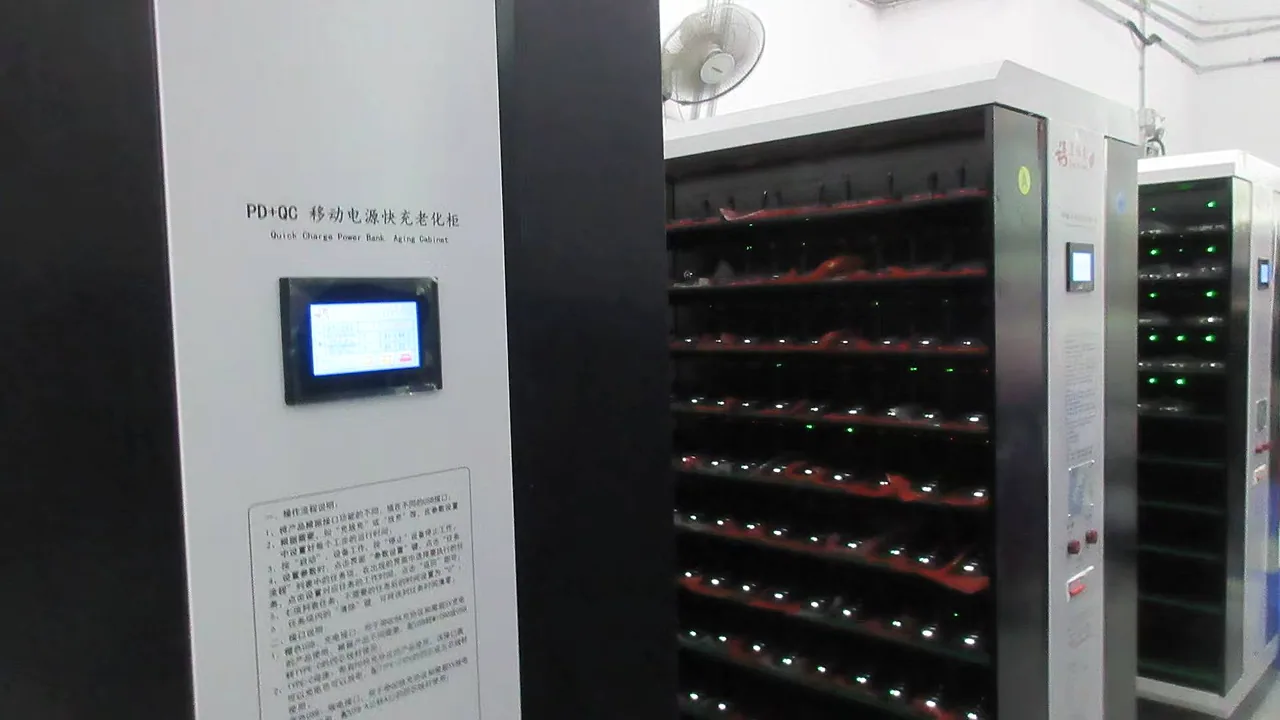
Incoming inspection should verify the approved cell identity and defined attributes. In-process and finished-product checks should cover charging, output functions, protection behavior, display accuracy, appearance and labeling. Aging or cycle testing should use documented limits and sampling rules rather than an undefined statement that every product is '100% tested.'
For shipment inspection, agree which tests apply to every unit and which destructive or time-consuming tests apply to a sample. Capacity testing can take hours, so the sampling plan, test start time, equipment count, tolerance and handling of failures must be settled before the inspection date.
- Keep cell and finished-goods lot traceability.
- Require approval for critical-component substitutions.
- Record capacity-test failures by model and batch.
- Define retest and corrective-action rules.
- Retain approved samples and raw test records for repeat orders.
Red flags in supplier capacity claims
- The supplier states only mAh and will not provide nominal voltage or Wh.
- The same housing is offered with implausibly different capacities but unchanged weight or dimensions.
- A capacity screenshot has no model, sample, load, voltage or cutoff information.
- The supplier compares cell mAh with a competitor's 5V output mAh.
- The UN 38.3 file, label and specification show different models or energy values.
- The cell brand can change without buyer notification.
- The sales claim promises an exact number of phone charges without naming the phone, condition or losses.
- The factory refuses to include rated output or inspection tolerance in the approved specification.
Weight and dimensions are screening clues, not final proof. Different cell chemistries, housings and electronics can change both. Use them to identify questions, then verify the real construction and test evidence.
RFQ checklist for a capacity-sensitive power bank order
- Target country, sales channel and buyer type.
- Required nominal capacity and maximum product size or weight.
- Target devices, output voltage profiles and maximum power.
- Preferred cell manufacturer or acceptable approved alternatives.
- Required rated output capacity or energy and test method.
- Sample quantity and whether samples must be production-representative.
- Capacity-test sample size, tolerance and raw-data format.
- Required UN 38.3, safety, market-access and shipping documents.
- Logo, color, packaging, manual and rating-label requirements.
- Estimated order quantity, launch date and delivery destination.
A complete RFQ lets the manufacturer recommend an existing platform with a suitable cell and output architecture. This is usually faster and lower risk than selecting a shell from a photo and deciding the capacity afterward.
Frequently asked buyer questions
Is a 10,000mAh power bank that delivers less than 10,000mAh at 5V defective?
Not necessarily. The cell capacity is normally stated at the battery's nominal voltage, while the USB output is converted to 5V. Voltage conversion and the product itself consume energy. Judge the unit against a clearly declared output rating and defined test method, not a direct comparison between unlike mAh values.
Should buyers compare power banks by mAh or Wh?
Use both for different purposes. mAh is useful when the reference voltage is stated. Wh is better for comparing energy across different voltages and checking transport-related ratings. Always record nominal voltage with the mAh value.
How many samples should be capacity-tested?
One unit can support engineering diagnosis but cannot describe batch variation. The appropriate number depends on order size, risk, test duration and the agreed inspection plan. Define it before production and increase investigation when results approach the limit or vary unusually.
Can the supplier change to another cell with the same capacity?
Only through an agreed change-control process. The replacement may affect runtime, heat, dimensions, safety evidence and transport documents even when the printed mAh value is the same.
What should appear on a capacity test report?
At minimum: supplier and product model, sample identifier and revision, cell model, date, equipment, charge method, rest period, output port and voltage, load, cutoff, temperature, duration, output mAh, output Wh, result and reviewer.
Choose a claim that production can defend
A reliable capacity program connects the marketing number to the cell specification, pack energy, output rating, test method, product label, documents and batch controls. If one part changes, the responsible team reviews the rest.
For importers and private-label brands, the strongest product is not automatically the one with the largest mAh printed on the housing. It is the model whose energy claim can be explained to a distributor, reproduced on a sample and maintained through repeat production.
Start with the target device, desired operating time, size, output and market. Then select a mature standard platform, approve the cell and evidence, and add branding or packaging without weakening label clarity or traceability.
Sources and editorial note
This guide combines current primary-source guidance with TOPTAI’s experience supporting OEM/ODM power bank evaluation. Requirements can change by model, market, carrier and date; confirm the exact product and destination before ordering or traveling.
- IATA — Passengers travelling with lithium batteries (Wh calculation)
- IEC — IEC 61960-3:2017 portable lithium cell and battery performance requirements
- EUR-Lex — Regulation (EU) 2023/1542 concerning batteries and waste batteries
- TOPTAI — Factory and quality process
- TOPTAI — Power bank shipping documents guide

ABOUT THE REVIEWER