

Choosing an OEM power bank manufacturer is not simply a matter of finding a factory with the lowest quotation, the largest workshop, or the longest product catalog.
For a B2B buyer, the real question is more practical:
Can this manufacturer repeatedly deliver a safe, compliant and commercially viable power bank for your market?
That distinction matters because a power bank contains lithium-ion cells. A poor supplier decision can lead to inconsistent capacity, unstable charging performance, certification problems, shipment delays, customer returns or, in serious cases, overheating and fire-related recalls.
In June 2025, the U.S. Consumer Product Safety Commission announced the recall of about 1.158 million power banks because their lithium-ion batteries could overheat and create fire and burn hazards. Other power bank recalls have involved both established brands and smaller sellers. These cases show that a familiar brand name, an attractive sample or a certificate image is not enough. Buyers need evidence that the product, components and production controls are reliable at scale.
This guide explains how brands, wholesalers, importers, retailers and e-commerce sellers can evaluate an OEM power bank manufacturer before placing an order.
01 / OEM BUYER CHECK
1. Define What “OEM” Means for Your Project
Before comparing manufacturers, define the level of customization you actually need. Buyers and suppliers often use “OEM” to describe very different projects.
| Project type | Typical changes | Engineering involvement | Main purchasing risk |
|---|---|---|---|
| Private label | Logo, label and standard packaging | Low | Limited product differentiation |
| Appearance customization | Pantone color, finish and custom packaging | Low to medium | Color consistency and higher material MOQ |
| Functional customization | Capacity, output power, built-in cable, display or firmware changes | Medium to high | Testing, cost and compliance changes |
| New product development | New PCB, structure, mold or charging system | High | Longer timeline, engineering cost and development risk |
A buyer who only needs a mature model with a logo and retail packaging does not necessarily need a factory specializing in complex new-product development. Conversely, a buyer requesting a new power-management system should not select a supplier whose main capability is logo printing.
Ask the manufacturer to separate your requirements into four groups:
- Changes that can use an existing product platform
- Changes that require new components or tooling
- Changes that require engineering validation
- Changes that may affect existing test reports or market compliance
The right manufacturer is not automatically the one offering the most services. It is the one whose real capabilities match the complexity, order volume, budget and launch schedule of your project.
02 / OEM BUYER CHECK
2. Evaluate Product Safety and Quality Consistency
Sample performance is important, but B2B buyers ultimately receive mass-produced goods. The key question is whether the approved sample and every subsequent production batch will use the same critical components and meet the same standard.
Check the battery cell and PCBA
Ask the supplier to identify:
- Cell type, nominal capacity and supplier
- Cell grade and batch-control method
- PCBA solution and supported charging protocols
- Overcharge, over-discharge, overcurrent, short-circuit and temperature protections
- Rated energy in watt-hours, not only the advertised milliamp-hour capacity
- Input and output performance under realistic loads
“Brand-name cells” should not be accepted as a complete answer. Buyers need to know whether the cells come from an approved source, how incoming capacity and internal resistance are checked, and whether substitutions require written approval.
Review the quality-control process
A reliable manufacturer should be able to explain how it controls the product at each stage:
- Incoming inspection of cells, PCBAs, cables, connectors and housings
- Functional testing of semi-finished assemblies
- Aging, charge-discharge and load testing
- Finished-product functional and appearance inspection
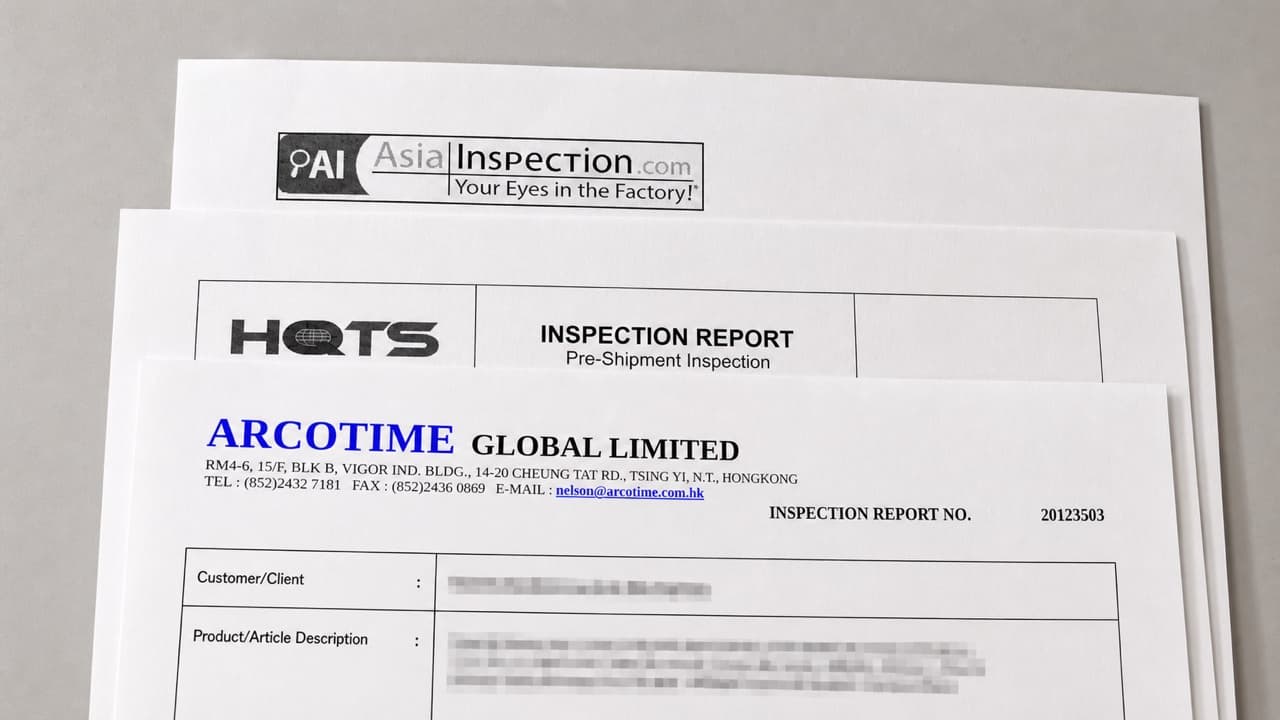
- Pre-shipment sampling or third-party inspection
- Batch coding and retention of inspection records
Do not judge the system only by the number of testing machines shown in factory photos. Ask for a sample inspection record, the test criteria for your model and the procedure used when a result falls outside the limit.
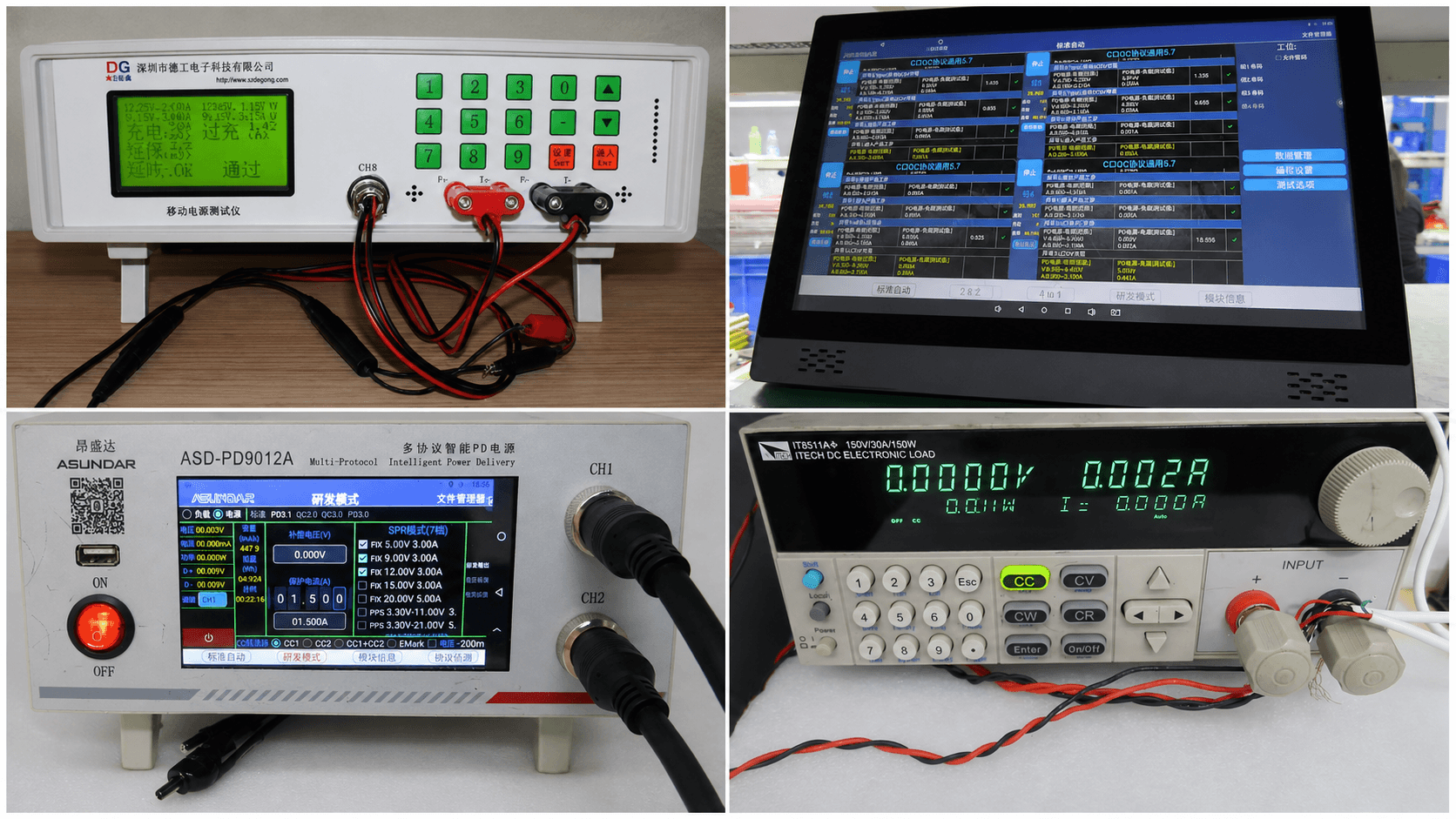
TOPTAI uses dedicated power bank test instruments for charging and discharging checks, protocol and port verification, voltage and current measurement, protection-response review and controlled electronic-load testing. The equipment supports the quality process, but the acceptance criteria still need to be tied to the approved model, specification and production batch. Buyers may request the relevant test scope and inspection criteria during sample approval.
Verify sample-to-production consistency
Before approving mass production, freeze the important product information in writing:
- Final specification sheet
- Approved golden sample
- Critical component list or agreed BOM controls
- Charging protocols and performance limits
- Logo, color and packaging artwork
- Test requirements and acceptable tolerances
- Applicable report or certification version
- Rules for component or process changes
If the factory may replace a cell, control IC or other critical component without approval, a successful sample test does not provide sufficient protection.
03 / OEM BUYER CHECK
3. Verify Compliance for the Target Market and Sales Channel
There is no single certificate that makes a power bank acceptable in every country and every sales channel.
The required compliance route depends on factors such as:
- Destination country or region
- Battery and finished-product construction
- Wired or wireless charging functions
- Rated capacity and watt-hours
- Retailer or e-commerce platform requirements
- Shipping method
Start by telling the manufacturer where and how the product will be sold. A supplier that promises “all certificates are available” before asking about the destination market and exact model is not conducting a serious compliance review.
Distinguish transport documents from market compliance
UN 38.3 is frequently misunderstood. It relates to lithium battery transport testing; it is not, by itself, authorization to sell a power bank in a particular market.
The International Air Transport Association states that lithium cell and battery types must pass the applicable tests in subsection 38.3 of the UN Manual of Tests and Criteria to be permitted in transport. Manufacturers and subsequent distributors must also make a test summary available. Shipping requirements can additionally cover state of charge, packaging, labeling and documentation.
Market access is a separate matter. Depending on the destination and product configuration, requirements may involve electrical safety, electromagnetic compatibility, restricted substances, battery rules, labeling, producer obligations or platform-specific testing. For example, UL 2056 addresses safety aspects of power banks, including overcharge and discharge protection, short circuits, overload, impact and thermal safety. In the EU, batteries are also subject to Regulation (EU) 2023/1542 and its phased obligations.
Confirm that every report matches the actual product
For each important report, check:
- Applicant and manufacturer names
- Exact model number and listed series models
- Cell manufacturer, cell model and capacity
- PCBA or other critical construction details where applicable
- Test standard and edition
- Issue date and issuing laboratory
- Whether the document is a full report, certificate, declaration or transport test summary
- Whether the document can be verified with the laboratory or issuing body
A report for a similar-looking model may not cover the product you are purchasing. A change to the cell, PCB, housing, power level or wireless charging module may also require a technical review or additional testing. The manufacturer should be able to explain the impact before making the change.
What compliance support can TOPTAI provide?
TOPTAI maintains compliance and transport-document support for selected mature power bank platforms. Depending on the exact model and configuration, the available document package may include CE, FCC and RoHS reports or certificates, together with lithium-battery transport materials such as UN 38.3 test reports or test summaries, MSDS and supporting air- or sea-shipment documents. Selected high-power or wireless models may also have additional model-specific documentation.
These documents are not presented as one universal certificate package. Before quotation or sampling, the TOPTAI project team reviews the destination market, sales channel, selected model, battery cell, PCBA, rated power and requested customization. The team then identifies which existing documents may apply, which details must be rechecked and whether new testing is required. Buyers can review the current model-specific document references on the relevant Power Bank product page and request the applicable files during project review.
04 / OEM BUYER CHECK
4. Match the Manufacturer’s Technical Capability to the Project
Do not ask only, “Can you customize this?” Ask how the change will be achieved and validated.
For a functional OEM project, determine whether the supplier has access to the relevant capabilities:
- Power-management and PCB engineering
- Charging-protocol configuration and testing
- Thermal evaluation
- Mechanical and tooling support
- Firmware or display adjustment
- Packaging engineering
- Reliability and pre-compliance testing
Then request a feasibility review that identifies:
- Which existing platform can be used
- Components that must change
- New engineering or tooling charges
- Sample and production timeline
- MOQ affected by each change
- New tests or reports that may be required
- Technical risks and compromises
A professional supplier should sometimes say no or recommend a different solution. Immediate agreement with every request can be a warning sign, particularly when a proposed change affects cell space, heat dissipation, charging power or safety protection.
TOPTAI has worked with portable charging products since 2009, giving the team 17 years of category experience in 2026. Its current range covers magnetic, fast-charging, solar, mini and device-specific power banks. This product depth allows many projects to begin with a mature platform instead of starting every specification from zero.
The TOPTAI project principle is to reuse proven modules for non-core functions whenever that does not weaken the customer’s product positioning. Reusing a mature charging, protection, display, cable or housing solution can reduce unnecessary tooling, engineering and validation cost. Where a feature creates the product’s real differentiation, TOPTAI keeps the relevant module, structure, interface or project configuration independent and manages it as customer-specific work. The objective is to save development cost without turning a distinctive product into a generic shared design.
05 / OEM BUYER CHECK
5. Assess MOQ in Relation to Your Business Stage
MOQ should be evaluated by customization level, not treated as one fixed number.
Ask for separate minimum quantities for:
- Standard samples
- Logo printing
- Pantone color production
- Custom packaging
- Changes to cables, cells or other components
- PCB or firmware modifications
- New tooling
A lower MOQ can be useful for a new brand or a new sales channel, but the lowest possible quantity is not automatically the safest commercial choice. Extremely small orders may depend on available stock, shared materials or manual processes. These conditions can make future consistency more difficult.
The appropriate first order depends on the buyer’s stage:
- A new seller may need a small sample batch to validate demand.
- A young brand with one sales channel may need a controlled trial order.
- An established brand adding a new category may need several hundred units for a structured launch.
- A mature multi-channel business may need a larger opening order to maintain stock, packaging efficiency and market coverage.
The manufacturer should explain what changes when the MOQ changes: unit cost, material choice, packaging method, lead time and ability to reproduce the same product on the next order.
What is TOPTAI’s MOQ?
TOPTAI does not apply one MOQ to every power bank. Many mature magnetic, fast-charging and solar models currently start from 100 pieces for a standard configuration or basic private-label project. Selected models start from 200 or 500 pieces, while certain high-power or more specialized products can require 1,000 pieces. Dedicated power bank models generally start from 200 pieces, with some models starting from 500 pieces.
The final MOQ also depends on what the buyer changes. A logo on an existing model normally requires less commitment than a Pantone housing, new packaging material, customized cable, changed cell or PCBA, new mold or independent functional module. TOPTAI therefore separates product MOQ, logo MOQ, color MOQ, packaging MOQ and engineering MOQ during the project review. This helps a buyer choose the smallest commercially repeatable order—not an artificially low quantity that creates unstable materials, high unit cost or difficulty reproducing the next batch.
06 / OEM BUYER CHECK
6. Compare Total Cost Instead of Unit Price Alone
Price remains an important supplier-selection factor, but two quotations are comparable only when their underlying specifications and commercial terms are the same.
Ask every shortlisted manufacturer to quote against one controlled requirement sheet covering:
- Cell type and rated capacity
- Rated input and output power
- Supported charging protocols
- Housing material and finish
- Cable and accessory specifications
- Logo method
- Packaging configuration
- Testing and inspection requirements
- Reports included with the model
- Warranty and defect-handling terms
- Incoterm and delivery location
Then calculate the broader cost:
Total purchasing cost = product price + customization + tooling + testing + packaging + inspection + lithium-battery logistics + import costs + expected quality and after-sales risk
A lower unit price may result from a different cell, lower-capacity design, simpler PCBA, reduced inspection, existing stock or excluded packaging and testing costs. The price difference is not automatically dishonest—but the supplier should be able to explain it clearly.
The practical buying rule is not to choose the lowest quotation; choose the most reasonable complete solution. A reasonable quotation should match the required cell, capacity, output, protection design, materials, inspection level, documents, packaging, warranty and delivery plan. If a supplier is cheaper because an item has been removed or downgraded, the buyer should be able to see that difference before making the decision.
TOPTAI’s project team starts by identifying which requirements create value for the buyer’s market and which ones add cost without creating useful differentiation. Mature common modules are recommended for non-core functions, while customer-specific modules are reserved for the features that make the product unique. This approach is designed to reduce unnecessary development, testing and tooling expenditure while keeping the commercial identity of the product clear.
07 / OEM BUYER CHECK
7. Confirm Lead Time and Delivery Reliability
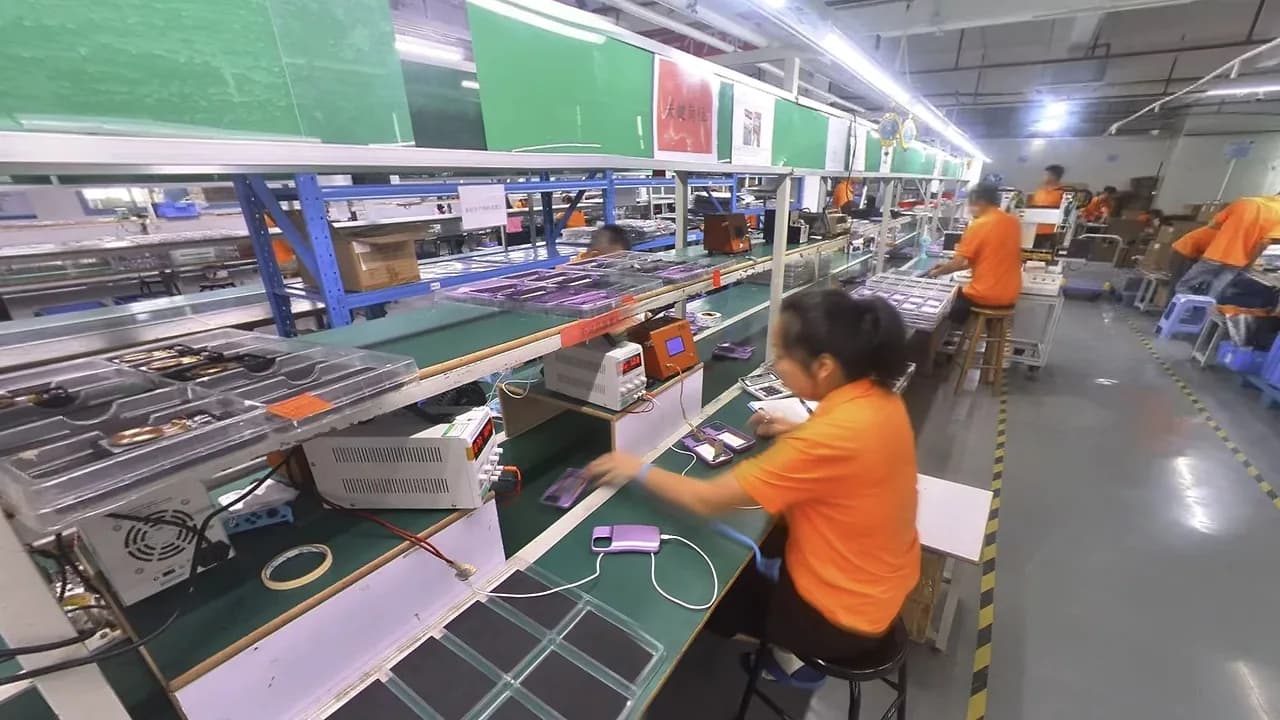
“Production takes 15 days” is incomplete unless the starting point and dependencies are defined.
Build the schedule backward from the required launch date and include:
- Requirement confirmation
- Engineering review
- Sample production
- Sample testing and buyer approval
- Compliance testing, if required
- Packaging artwork and proof approval
- Material procurement
- Mass production
- Inspection and corrective action time
- Dangerous-goods booking and transportation
Ask when the quoted lead time begins. Is it counted from payment, sample approval, final artwork approval or arrival of all custom materials?
Factory capacity also needs context. A high advertised daily output does not prove that your order will receive capacity at the required time. Ask about the lead time of critical materials, peak-season planning, normal on-time performance and repeat-order arrangements.
08 / OEM BUYER CHECK
8. Review Supply-Chain Traceability and Change Control
Many power bank problems originate in uncontrolled material variation rather than final assembly alone.
The manufacturer should be able to show how it controls:
- Approved suppliers for critical components
- Incoming batch records
- Cell and PCBA lot identification
- Material substitutions
- Engineering change approvals
- Production and inspection records
- Defect tracing after shipment
Include a written requirement that critical components cannot be changed without notification and approval. When a change is proposed, the supplier should state why it is needed, how it affects performance and compliance, and what validation will be completed before production.
09 / OEM BUYER CHECK
9. Define Warranty and Quality-Issue Procedures Before Ordering
“One-year warranty” is not a complete after-sales agreement.
Clarify:
- When the warranty period starts
- What is considered a manufacturing defect
- How defective units will be documented
- Whether the buyer may use third-party inspection or testing
- How replacements, credits or refunds will be calculated
- Who pays the freight associated with confirmed defects
- What happens if a safety-related issue affects an entire batch
- Whether the supplier will provide root-cause analysis and corrective action
For significant problems, the manufacturer should be able to trace the production batch, investigate retained records or samples, identify the root cause and propose preventive action. Agreeing on this process before the first order is more useful than negotiating responsibility after a problem occurs.
10 / OEM BUYER CHECK
10. Evaluate Communication and Project Management
Fast replies are useful, but accurate and controlled communication is more important in an OEM project.
Evaluate whether the supplier:
- Converts your commercial idea into a clear specification
- Identifies missing information before quoting
- Separates confirmed facts from estimates
- Records sample and specification changes
- Warns you about unsafe or unrealistic requirements
- Assigns a clear project owner
- Keeps packaging, engineering, production and sales information aligned
- Maintains project records for future repeat orders
A capable project team reduces misunderstandings between the buyer, salesperson, engineer, production team and quality team. This becomes increasingly important when several product versions, packaging languages or sales markets are involved.
11 / OEM BUYER CHECK
Why Buyers Hand the Complete Project to TOPTAI
An OEM power bank order is easier to manage when product selection, engineering, compliance review, packaging, sampling, production, inspection and shipment preparation are coordinated by one accountable team. TOPTAI combines 17 years of portable charging experience, a broad power bank range and a project process that connects these decisions instead of asking the buyer to coordinate each supplier or technical checkpoint separately.
The team’s working method follows two principles:
- Reuse proven common modules for non-core functions when this reduces cost, risk and development time without weakening the product concept.
- Keep truly differentiating functions, structures or project configurations independent so the customer’s product remains private and commercially distinct.
For the buyer, this means fewer avoidable development charges, fewer disconnected decisions and a clearer path from idea to repeat order. The goal is simple: make the project less expensive where standardization is sensible, keep it independent where uniqueness matters, and make execution easier from sample approval through shipment.
12 / OEM BUYER CHECK
Red Flags When Selecting an OEM Power Bank Manufacturer
Be cautious if a supplier:
- Promises that one set of documents is suitable for every market
- Provides only certificate images and avoids sharing verifiable details
- Cannot identify the cell or critical components used in production
- Quotes far below comparable suppliers but cannot explain the difference
- Accepts every technical request without a feasibility review
- Refuses to define whether mass-production materials will match the sample
- Does not permit pre-shipment or third-party inspection
- Cannot explain how defective units are traced to a production batch
- Describes UN 38.3 as a general product sales certification
- Focuses only on factory size and daily output instead of process evidence
- Changes specifications verbally without issuing an updated document
One warning sign does not always mean the supplier is unsuitable, but unresolved uncertainty should be treated as a purchasing risk.
13 / OEM BUYER CHECK
OEM Power Bank Manufacturer Evaluation Scorecard
Use a weighted scorecard instead of making the decision from price alone.
| Evaluation area | Evidence to request | Suggested weight* |
|---|---|---|
| Safety and quality consistency | Test criteria, QC records, sample/BOM control | 20% |
| Target-market compliance | Model-matched reports and compliance plan | 15% |
| Product and engineering fit | Feasibility review, platform and engineering evidence | 15% |
| Cost transparency | Controlled quotation and component explanation | 10% |
| MOQ and scalability | MOQ by customization type and repeat-order plan | 10% |
| Delivery reliability | Project schedule and material lead times | 10% |
| Traceability and change control | Batch records and change procedure | 10% |
| Warranty and corrective action | Written defect and batch-issue procedure | 5% |
| Communication and project management | Clear specifications and revision records | 5% |
\*The weights are a practical example, not universal research data. Buyers should adjust them according to their market and project. A U.S. e-commerce seller may place greater weight on compliance and batch consistency, while a promotional-products distributor may give more weight to delivery and packaging execution.
Score each supplier only on evidence provided, not on claims made in a sales presentation.
14 / OEM BUYER CHECK
20 Questions to Ask Before Placing an OEM Order
- Which cell and PCBA will be used in the approved sample and mass production?
- How do you verify cell capacity and incoming quality?
- Which safety protections are included in the PCBA?
- Which tests are performed on every production batch?
- Will the mass-production product match the approved sample and specification?
- How are critical component substitutions controlled?
- Which reports apply to this exact model and configuration?
- Can the reports be verified with the issuing laboratory?
- What transport documents are available for this battery model?
- Could our requested changes affect the existing reports?
- Which parts of our project use an existing platform?
- Which changes require tooling, PCB work or new validation?
- What is the MOQ for the product, logo, color, packaging and functional changes?
- What exactly is included and excluded in the quotation?
- When does the sample and production lead time begin?
- Which materials could delay the project?
- Can we arrange a third-party pre-shipment inspection?
- How can a shipped unit be traced to its material and production batch?
- How are confirmed defects, replacements and freight costs handled?
- Who is responsible for controlling specifications and project revisions?
15 / OEM BUYER CHECK
Final Decision: Choose Evidence and Fit, Not the Biggest Claim
The best OEM power bank manufacturer is not necessarily the largest factory, the supplier with the most models or the company offering the lowest price.
Use this decision order:
- Eliminate suppliers that cannot demonstrate acceptable safety and market compliance.
- Confirm that the product platform and engineering capability fit the project.
- Verify that the approved sample, critical components and mass-production standard will remain consistent.
- Compare total cost, MOQ, timeline and supply-chain risk on the same specification.
- Evaluate whether the team can support repeat orders and resolve problems transparently.
A reliable OEM partner should help you make a product that can be manufactured repeatedly, imported legally, sold profitably and supported after launch. That is more valuable than an attractive first quotation.
16 / OEM BUYER CHECK
Work with TOPTAI on a Power Bank OEM Project
TOPTAI supports B2B power bank wholesale and customization projects for brands, wholesalers, importers, e-commerce sellers and promotional-product companies.
Depending on the selected product platform, available services include custom logos, retail packaging, Pantone colors and functional adaptation. Our team can help buyers define the specification, evaluate the customization level and prepare a sampling plan before mass production.
Most mature models can be evaluated from a 100-piece starting point, while specialized models and deeper color, packaging, component, structural or functional changes require a model-specific MOQ review. Available compliance support is also matched to the final product and market rather than promised as a generic document bundle.
Tell us your target market, sales channel, required functions, expected order quantity and launch schedule. We will first determine whether an existing platform can meet the project or whether additional engineering and testing are required.
If a proven common module can meet a non-core requirement, the team will recommend using it to control cost and timing. If a feature is central to the product’s differentiation, the team will define an independent development scope and protect the customer-specific configuration through the project process. Putting the complete project with one TOPTAI team is intended to save the buyer unnecessary cost, coordination time and execution effort.
Start with a product recommendation, quotation or custom sample plan.
17 / OEM BUYER CHECK
Frequently Asked Questions
What certifications should an OEM power bank manufacturer provide?
There is no universal certificate package for every power bank. The required documents depend on the destination market, product construction, shipping method and sales channel. Ask the manufacturer to map the requirements to the exact model rather than sending a general certificate collection.
Is UN 38.3 a product certification?
UN 38.3 relates to tests required for lithium cell and battery transport. It does not, by itself, prove that a power bank complies with all rules for sale in the destination market.
How can I verify power bank quality before mass production?
Approve a final sample and written specification, define critical components, review the factory’s test criteria, and arrange production inspection. Component and specification changes should require written approval.
What is a reasonable MOQ for custom power banks?
It depends on the customization. Logo printing on an existing model generally requires less commitment than a Pantone housing, custom packaging, PCB modification or new tooling. Ask for a separate MOQ and cost for each requested change.
Should I choose a large factory or a specialized manufacturer?
Choose the supplier whose product platform, quality system, compliance experience and order structure fit your project. Factory size alone does not establish product quality or project suitability.
Why are quotations for the same-looking power bank different?
The cell, rated capacity, PCBA, charging protocols, housing materials, inspection level, packaging, included documents and warranty may differ. Compare suppliers against one controlled specification before evaluating price.
How do I know whether the sample will match mass production?
Freeze the approved sample, specification, key component requirements, packaging files and test criteria. Add written change-control terms and inspect the mass-production batch before shipment.
How long does an OEM power bank project take?
It depends on whether the project involves only branding or requires new materials, packaging, engineering, tooling or testing. Request a schedule that separates sample development, approval, material procurement, production, inspection and shipping.
Can I use an existing test report under my own brand?
Possibly, but it depends on the report, market, applicant structure, model coverage, labeling and whether the final construction is unchanged. Confirm this with a qualified laboratory or compliance professional rather than assuming that a supplier’s existing report automatically covers your branded product.
What should be included in an OEM power bank agreement?
At minimum, include the final specification, approved sample, critical component controls, artwork, pricing, MOQ, lead time, inspection standard, report responsibilities, change-control process, warranty and defect-resolution terms.
18 / OEM BUYER CHECK
Sources
- U.S. Consumer Product Safety Commission, “More than One Million Anker Power Banks Recalled Due to Fire and Burn Hazards,” June 12, 2025: www.cpsc.gov/Recalls/2025/More-than-One-Million-Anker-Power-Banks-Recalled-Due-to-Fire-and-Burn-Hazards-Manufactured-by-Anker-Innovations
- U.S. Consumer Product Safety Commission, “INIU Recalls Power Banks Due to Fire and Burn Hazards”: www.cpsc.gov/Recalls/2026/INIU-Recalls-Power-Banks-Due-to-Fire-and-Burn-Hazards-Sold-on-Amazon
- International Air Transport Association, 2026 Lithium Battery Guidance Document: www.iata.org/contentassets/05e6d8742b0047259bf3a700bc9d42b9/lithium-battery-guidance-document.pdf
- UL Solutions, “Enhance the Safety of Power Banks with UL 2056 Testing”: www.ul.com/insights/enhance-safety-power-banks-ul-2056-testing
- Regulation (EU) 2023/1542 concerning batteries and waste batteries: eur-lex.europa.eu/eli/reg/2023/1542/oj/eng
- Abuzaid et al., “The Effect of Suppliers’ Green and Traditional Selection Criteria on Supply Chain Performance,” Sustainability, 2024: www.mdpi.com/2071-1050/16/15/6276
READY TO COMPARE A REAL PROJECT?