
APPLICATIONS & CHANNELS · VENDING-MACHINE SALES
Mini Power Banks for Vending Machines: Three Models Tested in Customer Projects
Compare three 5000mAh mini power banks evaluated in customer vending-machine projects. Check product and package dimensions, connector options and what to verify before ordering.
 Reviewed by Grace WongCo-Founder | Custom Charging Solutions Lead · Updated September 17, 2026 · 7 min read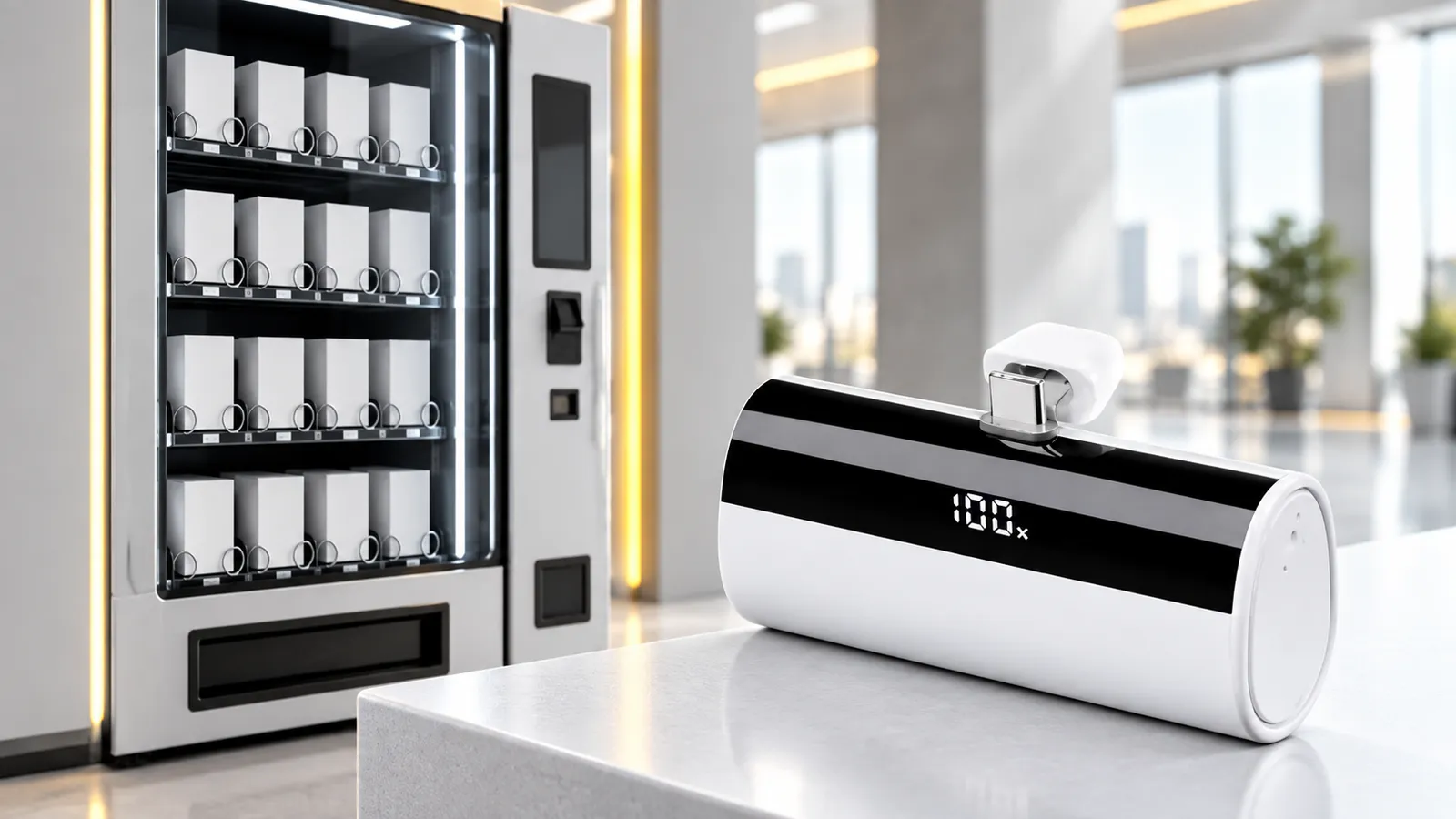
Mini power banks can work well for vending-machine sales, but product dimensions alone do not establish compatibility. Check the finished retail package, dispensing mechanism, connector choice and expected charging performance together. TOPTAI has supported three customer vending-machine projects and evaluated V1, V12 and V9 for this application.
What our customer projects taught us
This article is about power banks sold to customers to keep, not power-bank rental stations. TOPTAI has supported three customer projects in this sales channel. Across those projects, V1, V12 and V9 were evaluated for vending-machine use.
The first question is often, ‘Is the power bank small enough?’ The better question is, ‘Will the finished, packaged product fit the assigned slot and dispense consistently?’ A machine operator may set a limit such as 85 × 45 × 30 mm for one setup, but that is not a universal machine standard. Slot size, product orientation and dispensing method vary; the retail box can be much larger than the device.
All three models below use a 5000mAh cell. That cell-capacity figure is not the same as usable energy delivered to a phone. Results vary by phone, battery condition and charging setup. Test the finished sample with representative devices before promising a specific percentage or a full charge.
The three anonymized cases below come from a US airport vending-machine program using V1, a European convenience-store program using V12, and a Southeast Asian tourism-site program using V9. They show how machine fit, charging needs and operating conditions changed the selection. Each result belongs to its own project rather than promising the same outcome for another buyer.
Three 5000mAh mini power banks to compare
| Model | Product dimensions | Retail package dimensions | Key feature |
|---|---|---|---|
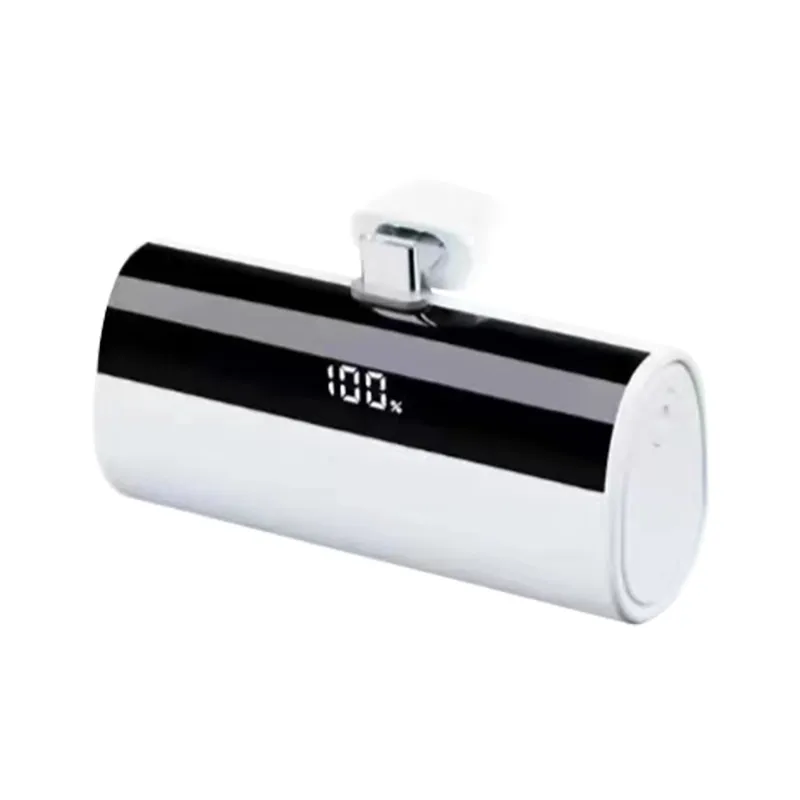
| V1 | 77 × 36.5 × 27 mm | 104 × 65 × 28 mm | Direct-plug connector and LCD battery display |
| V12 | 77.8 × 35.6 × 33.3 mm | 102 × 57 × 35 mm | Built-in USB-C connector and four-level indicator |
| V9 | 80 × 46 × 26 mm | 104 × 65 × 28 mm | Three interchangeable magnetic connector heads |
Dimensions are in millimetres. Confirm the final packaging specification and run a packaged-sample dispensing test in the intended machine before production.
Case 1: V1 for 200 US airport vending machines
The customer's requirement: A US vending-machine operator planned to stock mini power banks in 200 airport machines. The product needed to work as an immediate-use purchase, fit the assigned dispensing space and have FCC documentation for the approved configuration.
How the project was handled: We selected V1's direct-plug format and LCD battery display, then prepared customer-branded retail packaging. The device is 77 × 36.5 × 27 mm, but the completed retail pack is 104 × 65 × 28 mm—the measurement that matters when loading and dispensing it. The connector also needs protection inside the box.
The reported result: The project was delivered in three weeks, and the customer has placed a third batch of repeat orders. The lesson for another operator is not to assume that the bare power bank's size proves machine compatibility: test the approved, packaged sample in the actual lane.
Case 2: V12 for a 50-store European retail program
The customer's requirement: A European convenience-store brand wanted mini power banks sold through machines beside the checkout in 50 stores. Customers would buy one and continue their journey, so straightforward charging and a package that would dispense consistently were more important than a long feature list.
How the project was handled: The selected 5000mAh V12 has a built-in USB-C connector and four-level battery indicator. Its device dimensions are 77.8 × 35.6 × 33.3 mm; the retail pack is 102 × 57 × 35 mm. We treated the 35 mm boxed depth as a machine-fit constraint and used the supplied 3200mAh rated-capacity figure when reviewing charging expectations, rather than relying on the cell-capacity label alone.
The reported result: The customer reported a complaint rate below 0.5% for this program. That is a project result, not a general V12 performance guarantee. For a new market, agree on reference phones and test conditions before promising a full charge, and verify the documents for the exact configuration and destination.
Need a vending-machine model shortlist?
Send us your machine slot and dispensing details, maximum retail-package dimensions, connector needs, target market and estimated quantity. We can recommend a model and a sample-testing plan.
Request catalog & quotation →Case 3: V9 in a Southeast Asian tourism program
The customer's requirement: A tourism-site operator in Southeast Asia needed a mini power bank for a hot, humid environment and visitors carrying different devices. Connector coverage, the security of the small accessories inside the retail box and the product's environmental testing all mattered.
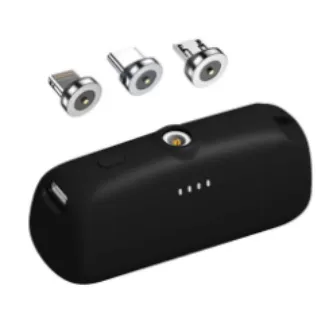
How the project was handled: We used a project-specific V9 configuration with an ATL cell and an exterior that passed IP54 testing. V9's three interchangeable magnetic connector heads addressed the mixed-device requirement. The body measures 80 × 46 × 26 mm; the retail package measures 104 × 65 × 28 mm. The packaging also needed to keep the selected heads together through dispensing.
The reported result: The customer's program has operated for six months. The IP54 test result and ATL cell apply to this approved project configuration; buyers should not assume every standard V9 has the same components or rating. Confirm the supplied heads, test report and packaged sample for each new project.
Vending-machine compatibility checklist
- Get usable slot width, height and depth, product orientation and dispensing-mechanism details from the machine operator.
- Compare the maximum permitted size and weight with the finished retail package, including inserts and accessories.
- Run repeated dispensing tests with the final packaged sample in the intended machine, not an empty box or an unpackaged device.
- Choose direct USB-C or a multi-connector bundle based on the expected customer-device mix.
- Test charging with representative phones and approve only claims supported by those results.
- Review model-specific labeling, battery and shipping documents for the destination and freight route.
How to start a vending-machine power-bank project
Send TOPTAI your machine slot specifications or a photo of the dispensing lane, maximum retail-package dimensions, target country, preferred connector mix and estimated order quantity. We can then shortlist V1, V12 or V9, review branding and packaging, and arrange a sample for machine-fit testing.
Sources and editorial note
The three anonymized project examples and their reported results were supplied by TOPTAI. Delivery time, reorder history, complaint rate and environmental performance are specific to those projects, not guarantees for every order or standard model. Confirm the final sample, packaging, device performance and destination-market documents before ordering.

ABOUT THE REVIEWER