
WIRELESS CHARGING · BUYER'S GUIDE
Qi2 vs MagSafe Power Banks: The 2026 Buyer's Guide
A practical sourcing guide for brands and importers comparing Qi2, Qi2 25W and MagSafe—covering certification, device compatibility, heat, real output and OEM decisions.
 Reviewed by Grace WongCo-Founder | Custom Charging Solutions Lead · Updated August 4, 2026 · 14 min read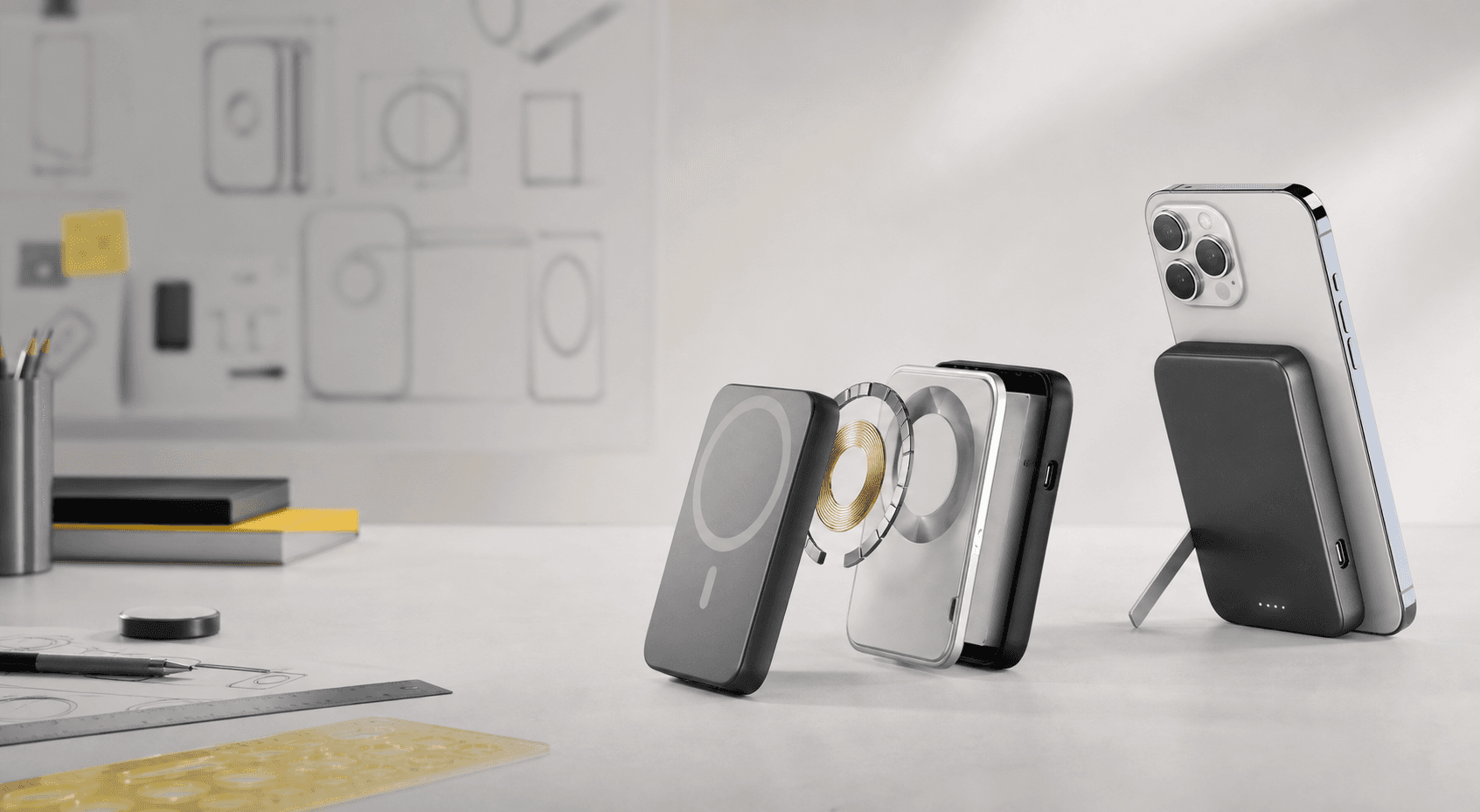
Qi2 is the Wireless Power Consortium’s interoperable magnetic charging standard; MagSafe is Apple’s branded ecosystem. For most multi-device retail programs, a genuinely Qi2-certified power bank offers the clearest compatibility story. Qi2 25W raises the available certified charging power from 15W to 25W, but a buyer still needs to validate the exact phone, firmware, thermal design and power profile. Never treat a magnetic ring, a “Qi2 compatible” claim or a laboratory peak as proof of certification.
What is the difference between Qi2 and MagSafe?
Qi2 and MagSafe overlap, but they are not interchangeable labels. MagSafe began as Apple’s magnetic attachment and charging system. Qi2 is an industry standard developed by the Wireless Power Consortium (WPC). Its Magnetic Power Profile brings repeatable alignment to certified products so a transmitter and receiver can couple more efficiently. That common framework is valuable to importers because it can support a broader, standards-based compatibility proposition instead of a claim tied only to one accessory shape.
The most important purchasing distinction is ownership and verification. Apple controls use of its trademarks and programs. WPC controls Qi certification and the Qi logo. A factory can build a magnetic power bank that physically sticks to a phone without the product being Qi2 certified. It can also describe a unit as compatible with certain phones while omitting whether it passed a recognized certification program. Buyers should make the approved claim, test evidence and label artwork explicit line items in the product specification.
WPC launched Qi2 in late 2023 and introduced Qi2 25W in July 2025. The consortium describes Qi2 25W as delivering nearly 70% more charging power than the original 15W level. This is a maximum standard capability, not a promise that every phone-power-bank pairing will remain at 25W through a full charge cycle. Device negotiation, state of charge, temperature and firmware can all reduce power.
| Term | Controlled by | Buyer meaning | Common mistake |
|---|---|---|---|
| Magnetic power bank | Manufacturer | Physical magnetic attachment; protocol may vary | Assuming magnets equal Qi2 |
| Qi2 | Wireless Power Consortium | Certified magnetic wireless charging profile, commonly up to 15W | Using the logo before certification |
| Qi2 25W | Wireless Power Consortium | Newer certified profile with up to 25W capability | Marketing peak output as sustained output |
| MagSafe | Apple | Apple-branded magnetic accessory ecosystem | Using Apple marks without the relevant authorization |
Why alignment and certification matter
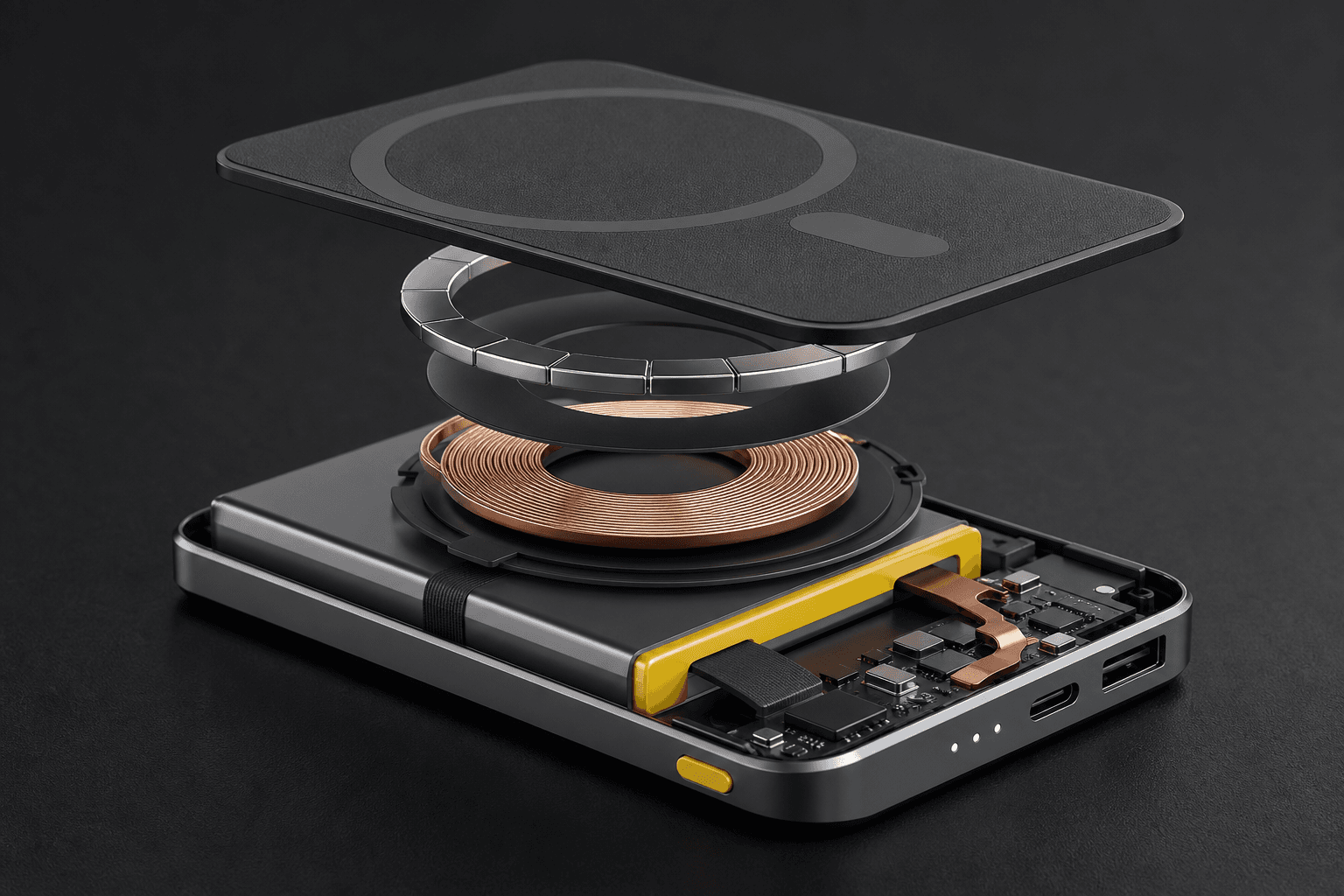
Wireless charging transfers energy across an air gap. When the transmitting and receiving coils are offset, more energy is lost and more heat can be generated. The magnetic ring in Qi2 is therefore not decoration: its geometry helps place the coils in a repeatable position. Better alignment can improve convenience and energy transfer, but only when the mechanical stack, shielding, control electronics and firmware are designed together.
Certification adds an independent checkpoint. WPC authorizes test laboratories to verify conformance with the Qi specification, and certified products can be checked in the consortium’s product database. For a buyer, the useful deliverable is not a screenshot of another model’s certificate. It is traceability from the commercial model and hardware revision to the certificate or test record, plus confirmation that the approved logo and claims match that exact configuration.
Certification also changes project timing. WPC’s 2026 knowledge base notes that certification testing had recently averaged about 24 days. That does not include industrial design changes, pre-compliance debugging, queue time, sample transport or artwork approval. A launch plan that leaves certification until after packaging is printed risks rework. Freeze the electrical platform, housing geometry and firmware first; then treat certification and production approval as gated milestones.
Qi2 25W does not mean 25W all the time
A power number on a listing is easy to compare and easy to misunderstand. Twenty-five watts describes an available negotiated charging level under supported conditions. A phone may request less because its battery is nearly full, its temperature has risen, its software applies a conservative curve or the attached case changes the thermal and magnetic interface. The power bank itself also has conversion losses and a limited thermal envelope.
Ask a supplier for a time-based charging record, not only a peak meter photo. A useful report identifies the phone model, software version, starting battery percentage, room temperature, case condition, power bank state of charge and test duration. It should show input or battery-side power, negotiated wireless power when measurable, surface temperatures and any power reduction. Repeat the test after the unit is heat-soaked and across multiple production-representative samples.
Capacity is another source of confusion. A 10,000mAh cell rating is measured at the internal battery’s nominal voltage, while delivered energy passes through conversion and wireless transfer stages. It will not place 10,000mAh into a phone battery. Publish rated energy in watt-hours and use a clearly described usable-energy test if you want to make recharge-count claims. Conservative, reproducible claims create fewer returns than an ideal-case number.
Compatibility: build a device-and-case matrix
A strong 2026 product brief starts with markets and devices. List the current iPhone generations you intend to support, the Android devices with native Qi2 capability, devices that depend on a magnetic-compatible case and older Qi receivers that may charge without magnetic attachment. Separate “attaches,” “charges” and “reaches the target power profile”; those are three different outcomes.
Cases deserve their own test column. Thickness, camera-lip geometry, metal decorations, wallet attachments and magnet placement can change holding force, coil alignment and heat. Test a thin reference case, a representative protective case, bare devices and any case sold in your bundle. Record whether the product stays attached during normal walking, whether buttons or cameras are obstructed and whether the pack can be removed without excessive force.
Also validate wired behavior. Many buyers use a magnetic power bank as a USB-C pack for earbuds, tablets or a second phone. Confirm USB Power Delivery profiles, simultaneous wired and wireless behavior, pass-through policy, low-current mode and how the product prioritizes outputs. If simultaneous operation is restricted for safety or heat, make the instruction clear rather than allowing customer support to discover it after launch.
- Define a minimum phone and case matrix before quoting.
- Verify attachment, charging handshake, power curve and temperature separately.
- Test at low, medium and high power-bank state of charge.
- Include USB-C cable and adapter assumptions in the report.
- Re-run critical tests on golden samples from the production tooling.
Need a Qi2-ready product route?
Tell us your target devices, retail price, capacity, industrial design and launch window. TOPTAI can shortlist current magnetic models and define the validation work before sampling.
Request catalog & quotation →Thermal design is a commercial feature
Heat affects speed, comfort and battery aging. A thin pack has less space to spread heat, while a stand, cable or display can constrain the internal layout. The engineering goal is not simply to keep the surface cool; it is to control cell temperature, component stress and user-touch temperature while maintaining stable charging. That requires a sound cell, protection system, coil and shielding design, heat-spreading materials, firmware thresholds and a housing that does not trap a hot spot.
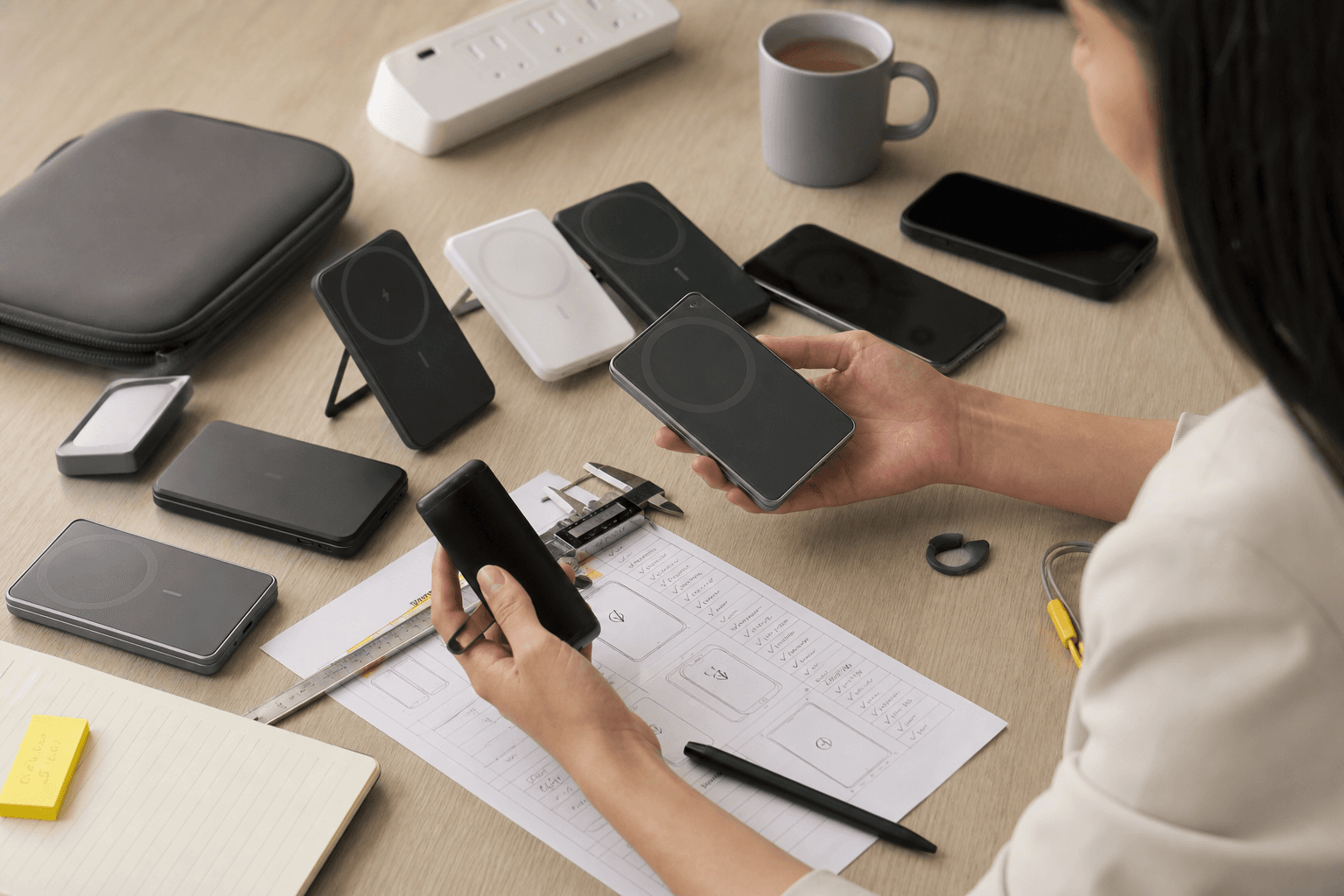
During sample review, measure the center and edges of the phone contact area, the power bank shell and the cell region over time. Test at a realistic warm ambient condition as well as a comfortable office temperature. Look for repeated on-off cycling, unexpected disconnects, swelling, odor, unusual noise or a surface temperature pattern that shifts between samples. A thermal camera is useful, but calibrated contact measurements and logged electrical data make the result easier to compare.
Do not solve heat only by silently reducing output. A stable lower-power product can be the right value choice, but it should be positioned honestly. For a premium Qi2 25W line, the thermal bill of materials and validation burden are part of the product—not optional add-ons. Buyers should compare total experience and return risk, not only the quoted board specification.
A buyer's sample and certification checklist
1. Lock the commercial claim
Write the exact front-of-box and product-page claim before testing: for example, certified Qi2 magnetic charging up to a specified level on supported devices. Have the laboratory and trademark owner requirements reviewed before artwork approval. Avoid “MagSafe certified” or a Qi logo unless your evidence and authorization support the precise wording.
2. Trace the evidence to the model
Ask for the certificate holder, product name, model identifier, hardware revision, firmware revision and database entry. Confirm whether a color, battery cell, coil, shielding, PCB, housing or firmware change requires an update or retest. Keep the approved bill of materials linked to the golden sample.
3. Validate the buyer experience
Run attachment, charging, thermal, drop, port-cycle and transport tests on production-representative samples. Review LED visibility, stand angles, cable clearance, camera interference, pocket comfort and instruction clarity. Include worst-case device and case combinations, not just the easiest phone.
4. Control production
Add incoming cell checks, magnet and coil positioning controls, firmware version control, functional charging tests and appearance checks to the inspection plan. Define acceptable measurement limits and sampling levels. A certificate verifies a tested design; ongoing conformity depends on production control.
- Exact target markets and phone list
- Certification owner and searchable record
- Approved claims and logo artwork
- Thermal and charging logs
- Golden sample and controlled BOM
- Incoming, in-process and final inspection criteria
Which option should your brand choose?
Choose a certified Qi2 route when cross-brand interoperability, recognized claims and a future-facing retail story matter. Choose Qi2 25W when your target devices can use the higher profile, your price point supports the more demanding hardware and testing, and speed is central to positioning. A mature 15W Qi2 platform may still be a better mass-market choice when cost, compactness and stable performance carry more weight than the newest number.
An Apple-focused range can still be designed around the iPhone user experience, but trademark language, compatibility and program requirements should be handled precisely. A low-cost magnetic-only product may suit promotions or markets where attachment convenience matters more than certified speed; in that case, avoid implying certification and make device-specific performance transparent.
The right sourcing conversation begins with the customer and channel, not the protocol acronym. Share target countries, online or retail channel, phone mix, desired capacity, size, materials, logo method, packaging, target order quantity and launch date. A qualified supplier can then identify what is already validated, what must be customized and which claims remain conditional. That sequence produces a defensible product faster than selecting the highest number on a quotation sheet.
Cost, MOQ and launch planning
A realistic cost comparison separates the electrical platform from customization. The base model covers the cell, PCB, coil, magnets, protection, enclosure and standard firmware. Adders may include premium cells, thermal spreaders, higher-power components, a metal stand, display, built-in cable, custom color, logo process, packaging, certification work and inspection. Ask for each line separately so a price reduction does not quietly remove the feature that supports your claim.
MOQ depends on what changes. A standard color with logo and a printed sleeve can enter at a lower quantity than a custom-molded housing, new magnet geometry or unique firmware. Certification can also be platform-specific; an apparently small structural change may require engineering review or retesting. For a market test, it can be wiser to launch an existing validated platform with differentiated packaging and then invest in tooling after customer evidence.
Build the schedule backwards from the retail date. Allow time for requirement confirmation, industrial-design or artwork work, engineering samples, device-matrix testing, corrective samples, certification, packaging proof, pilot production, inspection and freight. Reserve a decision gate after validation: proceed, simplify the claim or change the model. A rushed certification at the end is rarely faster than making the evidence part of the critical path from day one.
How to compare supplier quotations
Normalize every quotation before choosing. Require the same capacity definition, cell grade, wireless profile, USB-C input and output, accessories, logo method, packaging, test scope, Incoterm and warranty assumption. Ask whether the quoted unit is already certified, certification-ready on a shared platform or only described as compatible. These states have very different cost and risk.
Review physical samples blind if possible. Give evaluators the same phones, cases, cables and tasks, then score attachment, size, weight, heat, charging continuity, stand stability, button feel, display clarity and finish. Record data before discussing price. A model that costs slightly more but avoids disconnects and returns can produce a lower landed cost per satisfied customer.
Finally, ask who answers engineering questions and controls changes after approval. A polished sales sample is not enough if the factory cannot trace cells, coils, firmware and magnets during production. Put the controlled specification, approved sample, inspection criteria, certificate obligations and change-notification terms into the purchase agreement. That documentation turns a feature comparison into a repeatable product program.
Qi2 buyer FAQ
Does Qi2 work with every magnetic case?
No. A case can attach yet place the receiving coil poorly, add too much distance or create a thermal problem. Use cases built for the target magnetic system and validate representative designs. Wallets, metal plates and decorative rings should be removed unless specifically supported.
Is a 25W wireless power bank always faster than a 20W wired pack?
Not necessarily. Wireless transfer has additional losses and thermal constraints, while the phone controls its charging curve. Compare time-to-charge under the same starting percentage and temperature, not the headline number. Wired charging may remain faster or more efficient in some conditions.
Can the Qi2 certificate cover my private label?
Certification and brand-use arrangements depend on the registered product and program rules. Do not assume that changing only a logo automatically permits every claim or mark. Confirm the certificate record, holder, model naming and artwork route with the supplier and WPC process before printing.
What should appear in the user manual?
Explain supported attachment and charging behavior, compatible cases, USB-C profiles, safe operating temperatures, foreign-object precautions, simultaneous-output limitations, battery care and disposal. Use plain language and target-market languages. Avoid promising exact charge times across devices unless your controlled tests support them.
Sources and editorial note
This guide combines current primary-source guidance with TOPTAI’s experience supporting OEM/ODM power bank evaluation. Requirements can change by model, market, carrier and date; confirm the exact product and destination before ordering or traveling.

ABOUT THE REVIEWER